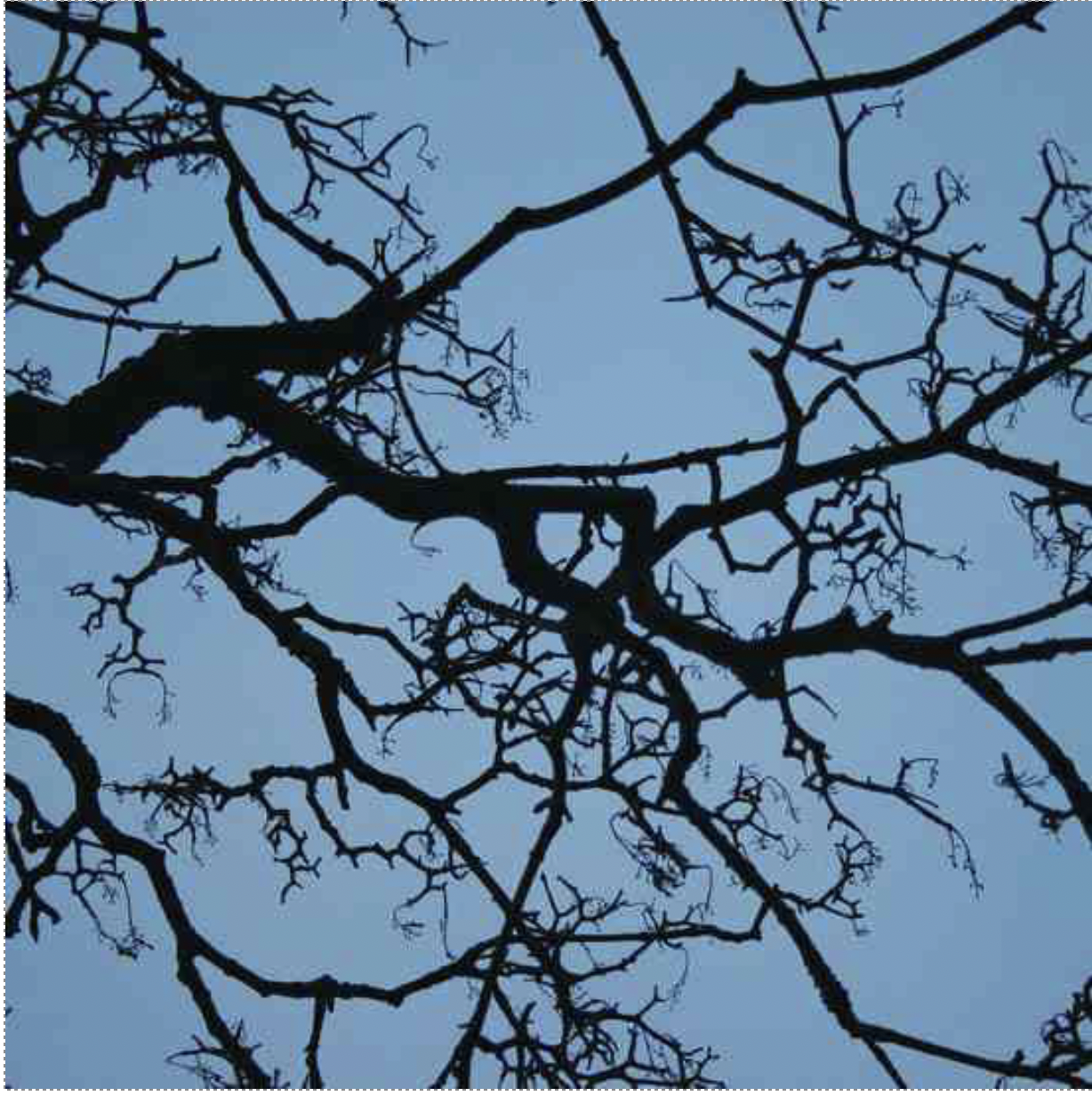
On Art and Aesthetics
In 2014 I decided to write down my observations on aesthetics, which became the essay that follows here and which I call Reticulate Aesthetics. I derived the idea from reticulate evolution and my observations as a scuba diver as well as an art historian.
It was in the late 1990s that I began to write essays focusing on what later came to be known as “Blue Art History.” My argument has been that the ocean and its contents should be regarded as works of art, and that the ocean realm has much to teach us about terrestrial aesthetics. My essay about reticulate aesthetics, published in 2015, summarizes these ideas.
Critic and curator Lydia Matthews, writing in American Craft Inquiry (“Daring to Dive Deeply: A Conversation about Craft Writing and Criticism” Volume One, Issue One, November 2016) observed that I developed my theory of Reticulate Aesthetics partly as a response to the critical positions of Clement Greenberg:
“To address this expansive complexity in the contemporary craft scene, Warmus increasingly recognized that Greenberg's focus on materiality and form alone no longer seemed viable. Inspired by the kind of embodied knowledge acquired through experiences as a scuba diver, he began to envision a new way of looking at craft – one more akin to viewing the rich underwater world.
Warmus described this analytical viewpoint as “reticulate,” which the Merriam-Webster dictionary defines as: “genetic recombination involving diverse interbreeding populations.” There is no judging “good,” “better,” “best” when comparing an octopus, shark, and a coral, so why would you want to impose hierarchical critical criteria to “species” in the craft world rather than seeing them as coexisting or hybridizing within a larger, more intricate ecosystem? Reticulate criticism proposes a more horizontal, weblike, and networked approach to writing about craft, one which recognizes that our field evolves organically over time, in response to specific environmental conditions.”
Reticulate Aesthetics: From a Tree to a Web
by William Warmus
This essay was published in American Craft magazine (April/May 2015) and the Utne Reader
Perhaps taking its cues from nature, the art world is becoming less hierarchical; critics should take heed.
I have been writing about art since the 1970s, and for most of that time the art world seemed, from my point of view, fairly stable. In the first decade of this century, though, I sensed a change in the structure of the art world, from a hierarchical pattern to a reticulate one, from a tree to a web. This was happening most in the world of art expos and social media, and least in art criticism and the academic community, perhaps because the tenure system is hierarchical. Styles of art also changed, as they always have. But even there, it was evident that structural changes were taking place.
Traditional art criticism and history identify art styles from good to better to best: a tree pattern, reaching ever upward for those who follow the correct path. The progression toward increasing abstraction in the 20th century, from Picasso to Pollock, is an example of the tree structure. But if an artist followed the wrong path at the wrong time, he was relegated to a lower branch, basically going nowhere. The exiling of realism as abstraction gained ground is one example: Who remembers Raphael Soyer?
And yet abstraction itself seemed to reach the far end of a limb with artists such as Morris Louis and Jules Olitski, just as a powerful new branch was flourishing, which combined abstraction with realism: pop art, Andy Warhol, and Jasper Johns. Mastering this system were the art critics and museum curators and dealers who “made taste,” people such as Clement Greenberg, Harold Rosenberg, Henry Geldzahler, and André Emmerich. They exercised hierarchical judgments when they selected individual artists to write about or exhibit.
That system worked to create the art world as we know it, or at least as it was at the end of the 20th century. And it was a pretty grand place to be, if you were in it. But there was a lot of suffering if you were not among the chosen artists—or mediums or class or gender or geographical region.
I was lucky enough to be a part of that old art world as a writer and curator. But in 1997 I learned to scuba dive, and that changed my life as well as my understanding of art. Diving first on pristine coral reefs in Fiji, I encountered landscapes that were so unusual that I wanted to call them works of art rather than of nature. Unable to find much written about them from this point of view, I brought my critical skills to bear on the underwater world and embarked on a brief career as a critic of the ocean realm.
I slowly learned that the ocean realm is highly resistant to critical interpretation and that it was arrogant of me to assume that I could play such a role. Once I met the ocean with humility and abandoned my project of applying art theory to deep water, I began to learn that the ocean had much to teach me about aesthetics.
Diving on coral reefs from Tonga to Hawaii to Bonaire to Florida, I learned about a form of evolution that was different from the hierarchical, Darwinian one. It is called reticulate evolution, and although most of my knowledge about it comes from the work of J.E.N. Veron on coral reefs, some terrestrial life forms also evolve this way.
I decided to take up this theory metaphorically and apply it to art, combining it with other observations about underwater behavior. I coined a term to help me collect all that I had learned from diving and the ocean realm: “reticulate aesthetics.” This was the late 1990s, when the internet was beginning to have a real impact on the way we think about the world. So I was thinking a lot about nets and webs, both underwater and in cyberspace.
I especially like the way a web or reticulate structure in evolution allows for “species blending” and challenges the idea of individual species and unchangeable hierarchies. Similarly, reticulate aesthetics goes beyond traditional art history as a history of individuals and discrete styles, seeing it instead as a history of collaboration and of blending.
This web pattern allows for cross-pollination of ideas and styles. It creates really excellent styles in places (e.g., glass, ceramics, metalworking) that under the tree structure never had any chance of ascending, styles that were always pushed to the side, relegated to a lower limb. And so reticulate aesthetics recognizes the potential value of all art. Our culture’s increasing willingness to look for art at the fringes (outsider art, art from materials such as dirt and urine, art that copies existing art) seems to be an example of this desire for cross-pollination.
That interconnectedness lends strength. As Moises Velasquez-Manoff wrote in the New York Times on interbreeding species, “Biodiversity has developed in a web of life rather than a tree of life.” The author used the pizzly bear, a blend of polar bear and grizzly bear, as an example of a stronger species that results from the web of biodiversity. (For further discussion, see Reticulate Evolution and Humans by Michael Arnold.)
So can we conclude that the reticulate model is replacing the hierarchical pattern in art? Maybe. But because power and money still rest with the tree structure—the winner-take-all paradigm that has been adopted by the contemporary art world—it is unlikely that the reticulate model will completely replace the hierarchy. Andy Warhol is not likely to be exhibited on the same wall with Raphael Soyer anytime soon. But maybe we can hope that ceramics, glass, fiber, and metal will be integrated with painting and sculpture when the Metropolitan Museum displays its contemporary collection for the next few years in the space currently occupied by the Whitney Museum. In the meantime, let’s take a look at some of the strengths of reticulate aesthetics.
Craft is essential
In the old art world, mastering technique got you to a branch on the tree, and you could move around on that branch, but not up or down to another branch. Mastering painting meant you were a serious artist; mastering clay or glass meant you were a technician.
In the 21st century, I see technique as the essential entry point to a network. Everyone needs to master some technique: glass, writing, carpentry, filmmaking. This gives you an entry ticket. Once part of the web, you can move around as you wish (depending, of course, on ability, luck, money, and political connections). There are no longer truly distinct styles of art: They blend, appear, disappear, reappear, are repackaged. Fiber art becomes fine art. Abstract sculpture becomes abstract glass. Optical glass becomes minimalist sculpture. Handmade gives way to machine-made, which gives way to craft and DIY, which give way to 3-D printing.
Visibility for mid-level artists?
The reach and affordability of social media mean that all artists have a chance of having their work seen. And if the art world is becoming more like a web than a tree, the artists we once called “mid-level” may be able to play on higher ground. The result could be more artists who are happier and economically stable. The old economics of art presumed a correlation between aesthetic value and retail price, producing a graph that looked like a ramp: The higher up you went, the better and more costly the art. The legitimacy of that relationship was never proven. The new economics theoretically seeks ways to price art so the entire reticulate system thrives. Good art may have many different price points, and prices may change depending on a variety of influences.
Mimicry: It has its uses
This is one of my favorite ways underwater behavior applies to art theory. Mimicry is a behavior fish use to survive: A weak fish mimics the color and shape of a dangerous or poisonous one to scare off predators. Over the years, my position about copying has changed, because of my observations of mimicry. I now theorize that it is natural for weaker artists to mimic stronger ones in order to survive in the marketplace. That, for me, is reticulate aesthetics at work.
Kinder and gentler, but also messier
In this complicated, reticulated world, critics and art historians need to revise how they discuss art. We must recognize how messy everything gets, and rather than intimidate and discourage, we need to encourage even more messiness.
We should push for civility within the world of art criticism and art history for two reasons: First, because we need some basic rules of discourse that respect the gender, race, and level of wealth and education of everyone; and second, because we can benefit from observations about behavior such as mimicry, which puts copyright infringement in a kinder, gentler light.
We need to tone down the endless bickering among critics and realize that the role of criticism in the 21st century is not to establish and support hierarchies, but to encourage the exponential growth of new art forms (and old art forms, too).
Encouraging new forms
Every artwork deserves our attention. But our time is limited. The idealistic task before criticism in the 21st century is to look at and appreciate all works of art everywhere. This is no longer a fantasy; with social media it is at least theoretically possible. We need to look at more art, encourage more art—not the other way around, as was the basis for 20th-century criticism: to discourage and narrow and elevate, to act with arrogant purpose.
From the viewpoint of reticulate aesthetics, everything is important and has a place. The key is to locate the place of each artwork and the direction of each style and map it all out, while realizing we all will produce different maps and nets. Of course, such a project is impossible, but it is possible for a nimble individual, working as part of a larger social media group, to help chart the art world in greater detail than it has ever been mapped before.
If we see the structure of art as a net or web rather than a hierarchy, the nature of judging changes, too. Judgments are no longer exclusively about good, better, or best, but rather about where in the web the artist and artwork fits. You judge in order to locate. The critic places art in a context, at a point on the web, and as part of a story. Distance and direction rule even for the critic.
Do we judge good and bad in a kinder, gentler system? I discovered a more respectful way to judge with a Facebook posting I made about my experiences at SOFA Chicago last November. I posted a series of handsome detail images of artworks that attracted my attention, and these produced many comments and much discussion. Among the social-media audience, we found ourselves judging and criticizing details, at times constructively, without criticizing the artists, and some viewers began to appreciate the work of artists they had previously dismissed. So the process of looking at details, really looking at them deeply, has become a new ally in my search for a kinder, gentler, and more satisfying criticism.
In the old art world, the hierarchical form of criticism was, I admit, very good at bringing closure: These are the 10 best objects from Art Basel. In the reticulate world, there is no closure. Every list of the best produces 10 more and 10 more. And on it goes.
It might be argued that a kinder, gentler criticism encourages a bland, passive art community. The opposite is true. We need more transparency and collegiality in our criticism because, in a reticulate environment, manipulation of the web conveys great power to control and distort remotely and under cover. A web or net is not always a passive structure: It can be actively woven and cast in order to capture. The historian of magic Ioan Couliano wrote in 1987 in his book Eros and Magic in the Renaissance (in a stunning passage that anticipates the structure of the internet) that “Indeed, what does the lover do by means of his deeds, words, services, and gifts other than create a magic web around the object of his love ... To put it simply: the lover and the magician both do the same thing: They cast their ‘nets’ to capture certain objects, to attract and draw them to them.” Couliano, interpreting the writer Giordano Bruno, describes a world where perfect knowledge by privileged individuals can be used to create bonds and “exercise control over others.” If the web or net as I envision it is to be open to all equally, we need to recognize this active and powerful side of reticulate aesthetics: that it can be used to control and project authority. I suggest a kinder, gentler criticism as a guard against those who would seek to use the power behind nets, webs, and social media as a means to manipulate rather than appreciate.
William Warmus is a former curator at the Corning Museum of Glass and the author of more than a dozen books. Reprinted from American Craft (April/May 2015), a bimonthly publication of the American Craft Council that celebrates the age-old human impulse to make things by hand.
Reticulate Aesthetics updates
I am adding to my theory in the notes below, which are unpublished. This is how I work in preparing an essay for publication, through more complex notes that require refining into a simpler language.
Reticulate Aesthetics: A Web-Based Theory of Art, Ecology, and Network Intelligence
William Warmus
October 20, 2026 Ithaca, New York
Part I: Foundations and Topologies (The Theoretical Turn)
Chapter 1: The Pyramid vs. The Web
For centuries, Western culture has been haunted by a singular, rigid geometric obsession: the pyramid. From the structural teleologies of classical art history to the stratified timelines of stylistic evolution, the pyramid asserts a world governed by apexes, foundations, and absolute subordination. In this architectural imaginary, culture is a monumental ascent. At the base lie the raw materials and the unrefined masses; at the center, the steady march of historical epochs; and at the pinnacle, the solitary genius, the masterwork, or the definitive institutional canon.
Even when modernism attempted to flatten or disrupt these hierarchies—through the grid, the collage, or the anti-aesthetic—it frequently fell back on linear progressions, replacing the traditional canon with a new, equally exclusionary sequence of avant-garde breakthroughs. The fundamental flaw of the pyramid and its linear descendants is not merely that they are elitist; it is that they misrepresent the physical and conceptual reality of how things actually exist, interact, and endure. They isolate objects from their environments, sever the viewer from the active production of meaning, and impose an artificial top-down control upon a world that is inherently lateral and reciprocal.
To break free from this vertical tyranny, we must abandon the pyramid in favor of the web.
This conceptual pivot is the foundation of reticulate aesthetics—a framework born out of the recognition that art, ecology, and information do not flow downward from a source, nor do they ascend toward a summit. Derived from the Latin reticulum, meaning a little net, a reticulate topology conceives of reality as an expansive, non-hierarchical mesh of interconnected nodes. In a reticulate framework, there is no apex. There is only an ongoing, decentralized circulation of energy, light, material, and meaning where every point of contact acts simultaneously as a receiver and a transmitter.
When we apply the pyramid model to art history, we encounter a profound friction. An artwork is treated as a static monument locked inside a chronological tier, safely cataloged by its date and style, waiting to be judged by its proximity to historical greatness. But when we view that same object through a reticulate lens, the monument dissolves into a dynamic circuit. A studio glass sculpture, a medieval incunabulum leaf, or a digital archive is no longer an isolated artifact at the top or bottom of a scale; it is an active node embedded in a living matrix of makers, materials, viewers, and environments.
Consider how this shift alters our understanding of physical space and optics. A classical sculpture asserts its presence through opaque mass, commanding its surroundings from a pedestal. By contrast, transparent media—such as the complex, layered optics of studio glass—refuse such isolation. They are porous; they capture the shifting daylight of a room, fold the architecture and the observer into their internal matrix, and break down the boundary between interior volume and exterior world. The glass object does not sit above its environment; it participates in it. It is a node that mirrors the decentralized architecture of a coral reef or the distributed redundancy of modern digital networks.
To adopt reticulate aesthetics is to recognize that we no longer inhabit a world of monuments, but a world of webs. By dismantling the pyramid and tracing the lateral threads that connect studio glass, marine ecology, and modern digital architecture, we open up new pathways for criticism that honor the true, complex interdependence of our shared cultural landscape.
Chapter 2: Defining Reticulate Aesthetics
The coining of a theoretical framework is never an arbitrary act; it is an attempt to name a structural reality that existing vocabularies fail to capture. Established in 2015, reticulate aesthetics arose from the urgent need to bridge the widening chasms between specialized art criticism, ecological observation, and the emerging realities of network computing.
Traditional aesthetics remains stubbornly anthropocentric and object-bound. It treats the art object as an autonomous entity evaluated through formalist isolation, or reduces it to a symptom of sociological forces. Neither approach accounts for the porous, interconnected nature of contemporary perception. We live in an era defined by global telecommunications networks, collapsing ecosystems, and digital archives that span continents. In this environment, viewing an artwork as a static, bounded icon is an act of perceptual denial.
Reticulate aesthetics posits that aesthetic experience is fundamentally web-like. It operates through distributed resonance rather than singular authority.
The Mesh Over the Autonomous Object: Nothing is truly standalone. Every artwork is an intersection of antecedent techniques, material extractions, economic exchanges, and optical conditions.
The Reciprocity of Perception: The viewer is never a neutral, disembodied eye looking at a canvas or a vitrine. Perception is a feedback loop; the observer alters the observed, and the observed reorganizes the cognitive framework of the observer.
Non-Hierarchical Cross-Pollination: Just as ecological webs sustain biodiversity through lateral nutrient flows, cultural vitality depends on the unhindered, non-hierarchical movement of ideas between disparate disciplines—connecting art history with marine biology, material craft with digital network theory.
By grounding criticism in a reticulate model, we abandon the exhausting pretense of the absolute masterpiece. We learn to trace the invisible, humming lines of connection that bind the studio to the sea, the archive to the server, and the maker to the world.
Chapter 3: The Oblique Narrative
In a hierarchical culture of information, meaning is demanded to be direct, transparent, and authoritative. The pyramid values the thesis statement, the headline, and the unequivocal conclusion—tools designed for rapid categorization and top-down control. But human experience, particularly in its deepest philosophical and artistic dimensions, is rarely linear or direct.
Drawing upon the lessons of hermeneutic philosophy—most notably the teachings of Paul Ricœur, master of narrative and the oblique—reticulate aesthetics recognizes that profound truths are most often communicated indirectly. Meaning does not sit exposed at the summit of a logical argument; it refracts through metaphor, symbol, and narrative distance.
The oblique narrative operates like light passing through a multi-layered glass prism. A direct beam of light hitting a flat, opaque surface produces a blunt shadow. But light entering a reticulate, layered medium is deflected, split, and delayed, emerging on the other side as a complex, dappled pattern of illumination that reveals far more about the internal structure of the glass than a direct reflection ever could.
Similarly, art criticism and historical interpretation must embrace obliquity. When we write about art, we are not delivering unassailable legal verdicts; we are spinning interpretive webs. By weaving together personal journals, historical notebooks, literary allusions, and scientific observations, we create a multi-voiced narrative space. The oblique approach respects the autonomy of the artwork, allowing it to speak not through forced dogma, but through a rich, resonant chorus of contextual echoes.
Chapter 4: The Contemporaneous Journal
History is rarely written in real time; it is usually assembled posthumously by victors and curators who smooth over contradictions, erase false starts, and force messy human lives into tidy, teleological timelines. The pyramid demands the polished final monograph; the web values the living, breathing field note.
The practice of maintaining contemporaneous handwritten journals—a disciplined method forged during rigorous professional environments such as federal court expert witness proceedings—stands in direct defiance of retrospective revisionism. A journal written on the spot, amidst the friction of an active appraisal, an underwater dive, or an archival discovery, preserves the raw, unvarnished cadence of thought.
In a reticulate framework, these journals are not mere preparatory drafts for a future publication; they are primary nodes within the critic's intellectual network. They capture the exact moment of perception before it is institutionalized by the art market or sanitized by academic convention. By recording observations contemporaneously, the writer maintains a direct, unfiltered circuit between immediate sensory experience and theoretical formulation. The journal becomes a map of a mind in motion—a vital, unhierarchical archive that honors the contingency and immediacy of genuine critical engagement.
Chapter 5: Friction and Flow
Every network—whether biological, optical, or digital—relies upon an intricate balance between friction and flow. In a naive utopian view of networks, all resistance is eliminated to achieve instantaneous, frictionless transmission. But in both ecology and art, absolute lack of friction leads to entropy and collapse.
Reticulate aesthetics recognizes that creative tension is generated precisely at the points of structural friction.
Material Resistance: The glassblower does not seek zero resistance; the molten glass must push back against the iron pipe, gravity, and thermal radiation. That physical friction is what gives the vessel its muscular integrity and expressive form.
Hermeneutic Friction: In cultural discourse, conflicting interpretations, archival gaps, and theoretical disagreements act as vital friction points that prevent intellectual stagnation. A culture of total consensus is a dead culture.
Ecological Friction: Natural systems depend on nutrient barriers, predator-prey pressures, and seasonal bottlenecks to maintain evolutionary fitness and resilience.
In curating, appraising, and writing, the critic must navigate this dynamic interplay. We do not seek to smooth out all historical contradictions or eliminate the stubborn material realities of an artwork. Instead, we embrace friction as the necessary resistance that brings form into sharp, enduring focus.
Part II: Optics, Transparency, and Studio Glass
Chapter 6: The Glass Vessel as a Distributed Node and Internal Optical Refraction
For millennia, the glass vessel has been understood through the domestic and sculptural language of containment. In the classical typology of art history and decorative arts, a vessel is defined by its boundaries: an interior hollow designed to hold liquid, enclosed by an opaque or translucent wall, and bounded by a clear rim and base. It is an object of enclosure, separating what is inside from what is outside. Even when studio glass broke away from utility in the mid-twentieth century to embrace purely sculptural forms, criticism frequently retained this container-logic, treating the object as a solid, self-contained volume that occupied space through mass and silhouette.
To view the glass vessel through the framework of reticulate aesthetics is to invert this traditional paradigm entirely. In a reticulate topology, the vessel ceases to be a static container of empty space; it becomes a distributed node within an active optical circuit.
Transparency is not merely a material property; it is an anti-hierarchical mechanism. When light encounters opaque sculptural media—bronze, stone, or wood—it is reflected or absorbed at the surface. The object asserts its boundary with finality. Transparent studio glass, by contrast, invites light to pass through its body, refract, bend, and return altered to the environment. In works where artists deliberately laminate, layer, or trap air within optical glass—such as the precise, fractured geometries of Tom Patti—the internal structure of the object becomes a complex internal map of refractions.
When light enters a piece of studio glass, it is subjected to internal micro-refractions caused by density shifts, colored layers, and fused planes. The object does not merely reflect its surroundings; it internalizesthem. The shifting daylight of a gallery, the color of a viewer's clothing, and the architectural lines of the surrounding room are pulled into the glass matrix, refracted, and projected back outward into space.
In this light, the physical boundary of the glass vessel dissolves. It is no longer possible to isolate the object from its environment, because the object’s visual identity is continuously constituted by what surrounds it. The viewer moving across the room is not a spectator standing outside a finished artifact, but an active participant whose trajectory alters the optical path of light through the glass. Every shift in perspective changes the internal constellation of reflections, proving that the artwork is not a static monument, but a living node in an ongoing, distributed web of perception.
Chapter 7: Internal Refraction and Environmental Collapsing
If Chapter 6 redefines the glass vessel as a distributed node within an optical network, Chapter 7 examines the mechanics of that network through the phenomena of internal refraction and environmental collapsing.
In classical sculpture and traditional glassblowing, the object relies on silhouette and surface texture to declare its autonomy. It stands apart from its room, establishing a clear threshold between the art object and the architectural envelope that contains it. But high-end studio glass—particularly works engineered with meticulous laminations, trapped air pockets, and micro-thin color plates—operates on an entirely different optical physics. It actively dismantles the distance between interior and exterior space.
When we observe a complex optical glass sculpture, we are witnessing a literal spatial collapse. Because the material possesses high optical purity and precise refractive indices, it does not merely reflect the room like a mirrored surface; it swallows it. The distant window, the overhead gallery lights, the passing silhouette of the curator or viewer, and the color of the adjacent wall are pulled inward, refracted through multiple internal planes, and reorganized into a dense, miniature cosmos trapped within the glass body.
This phenomenon directly mirrors the core tenets of reticulate aesthetics. In a reticulate web, boundaries are porous and hierarchical distinctions between subject and environment dissolve. The glass sculpture is not an isolated art object placed in a room; the room itself is internalized within the art object, compressed, distorted, and rendered fluid.
For the viewer, this creates a profound perceptual shift. Looking at the object requires moving around it, tracking how internal lines of sight shift with every millimeter of physical displacement. The viewer's body becomes part of the optical machinery. As we trace the refracted pathways deep inside the glass, we realize that the sculpture is acting as a lens that focuses the sprawling, chaotic environment of the gallery into a single, highly concentrated web of relational data. The container has become a connector, proving that in optical art, as in ecology, nothing exists in isolation—everything is folded into everything else.
Chapter 8: The Curator as Conductor
Having traced the material genesis of glass from the industrial hot shop to its optical manifestation as a distributed node, we arrive at the institutional space where these objects meet the public: the museum and the curated exhibition.
In traditional art-historical curation—grounded in the hierarchical pyramid model—the curator acts as an authoritative docent. Objects are arranged in strict chronological timelines or segregated by stylistic movements, framed by didactic wall texts that dictate a single, unidirectional narrative from historical cause to artistic effect. The museum vitrine functions as a fortress wall, isolating the precious artifact from the messy, breathing contingency of the real world.
Under the framework of reticulate aesthetics, the role of the curator undergoes a radical inversion. The curator is no longer an authoritarian gatekeeper dictating meaning from above, but a conductor tuning a sprawling, polyphonic circuit of relations.
When staging an exhibition of transparent media and studio glass, a reticulate curator does not arrange pieces in isolation. Instead, they curate intersections. Because studio glass objects are optical nodes that internalize and refract their surroundings, their placement relative to one another, to natural light sources, and to the physical path of the visitor creates an active web of visual dialogue.
Spatial Proximity as Resonance: Two sculptures placed across a gallery do not merely occupy adjacent floor space; their internal refractions cross the room, overlapping and superimposing their captured environments.
The Vitrine as a Semi-Permeable Membrane: Rather than sealing the object away in dead air, modern mounting techniques and open spatial layouts treat the display case as a porous boundary, allowing light and viewer movement to flow uninterrupted through the optical field.
The Viewer as Active Instrument: The curated exhibition becomes an active instrument played by the movement of the public. Every footstep shifts the angle of incidence; every change in weather outside the museum windows alters the chromatic intensity within the glass matrix.
In this light, curation ceases to be an act of taxidermy—stuffing dead objects into historical categories—and becomes an act of ecological orchestration. The museum is transformed from a static warehouse of the past into a dynamic, living network where art, space, and human consciousness continuously remake one another.
Chapter 9: Appraising the Immaterial
When an artwork ceases to be understood as a static, solid monument and is instead recognized as a distributed optical node—a complex intersection of light, environment, and physical material—the traditional mechanics of fine art appraisal face a profound philosophical and economic crisis.
In the classical art market governed by pyramid-era metrics, valuation is tethered to tangible scarcity, signature weight, and historical pedigree. An object is appraised based on its physical mass, its condition, and its position within a linear stylistic hierarchy. But how does one appraise an object whose primary aesthetic value is immaterial—an intricate matrix of captured daylight, internal refraction, and shifting spatial relations?
For the fine art appraiser specializing in studio glass and transparent media, this requires a shift from static accounting to reticulate valuation. When evaluating a masterwork of studio glass—such as a piece by Tom Patti—the appraiser must analyze factors that escape standard valuation spreadsheets:
Optical Performance and Purity: The degree to which the internal laminations and air traps successfully engage and refract ambient light across changing conditions.
Absorption Rate and Environmental Integration: How thoroughly the object collapses the boundary between its physical container (the gallery or private collection room) and its internal optical matrix.
Reticulate Provenance: Tracing not merely who owned the object sequentially on a linear timeline, but the broader network of exhibitions, critical dialogues, and ideological webs through which the object gained its cultural velocity.
Furthermore, when dealing with museum donations and USPAP-compliant valuations—such as evaluating a multi-piece glass collection for institutional acquisition—the appraiser acts as a bridge between economic systems and cultural preservation. The appraisal report cannot treat the works as inert commodities. It must articulate their function as active nodes within a broader public trust. By valuing the immaterial optical energy of the work alongside its physical condition, reticulate appraisal honors the true, living complexity of transparent media in the fine art market.
Part III: Submerged Ecologies and Marine Metaphors
Chapter 10: The Coral Reef as Ultimate Cooperative
Having traced reticulate aesthetics from the industrial hot shop through optical sculpture and institutional curation, we must now cross the threshold from human-made studio art into the planetary biosphere. The theoretical model of the web is not a human invention imposed upon nature; rather, human art is an echo of a much older, more expansive intelligence. To understand the root mechanics of reticulate systems, we must look to the ocean, and specifically to the coral reef.
In classical biological and economic paradigms, ecosystems have long been viewed through a competitive lens—a brutal, hierarchical struggle for survival where the strongest apex predators reign over a pyramidal food chain. But the coral reef shatters this reductionist model entirely.
A coral reef is the ultimate non-hierarchical cooperative. Built from millions of individual cnidarian polyps locked in an obligate symbiotic relationship with microscopic photosynthetic algae (zooxanthellae), the reef possesses no central brain, no command center, and no top-down regulatory authority. Yet, it constructs the largest living structures on Earth, visible from space, and sustains a quarter of all marine biodiversity.
When examined through the framework of reticulate aesthetics, the coral reef operates on principles identical to the laminated optical glass of Tom Patti or the distributed nodes of a digital network:
Decentralized Resilience: Without a central government or hierarchical control, the reef responds to environmental stress through distributed adaptation. If one node is bleached or damaged, surrounding nodes reroute metabolic energy and nutrient flows across the calcium carbonate matrix.
Porosity and Exchange: The boundaries of the individual organism are porous. Waste from the animal feeds the algae; sugars from the algae nourish the animal. The environment is not external to the organism; it is continuously metabolized through it.
Optics of the Shifting Column: Light penetration across the reef flat behaves much like light moving through transparent studio glass. Wavelengths refract, scatter, and attenuate through shifting water layers, painting the reef in a flickering, non-linear spectrum that resists static categorization.
The coral reef teaches us that complexity does not require a hierarchy. Life at its most magnificent is radically lateral, cooperative, and web-like. By recognizing the reef as a living sculpture built on reticulate principles, we dissolve the artificial wall dividing culture from nature, revealing that the artist's studio and the ocean floor are governed by the exact same physical and philosophical laws.
Chapter 11: Underwater Optics and Light Scattering
To move from the dry, atmospheric space of the gallery into the sub-surface realm of the sea is not to leave aesthetics behind, but to enter its most radical laboratory. When an active scuba diver descends beneath the surface, they step away from the rectilinear architecture of the human-built world and enter a fluid medium where light itself behaves entirely differently. The physics of underwater optics provide the ultimate physical proof for the principles of reticulate aesthetics.
In the upper atmosphere, light is directional, filtered primarily by distance and particulate matter in a predictable, linear fashion. But water is an active, dense optical matrix. As solar radiation penetrates the water column, it undergoes selective absorption, scattering, and diffusion. Red wavelengths are stripped away within the first few meters, followed by oranges and yellows, leaving the underwater world bathed in a shifting monochromatic blue-green continuum. Suspended plankton, organic detritus, and micro-currents act as millions of tiny refractive lenses, scattering light beams into soft, diffuse veils rather than sharp shadows.
The parallels between pelagic waters and high-end studio glass are startling and direct. When we examine a complex, layered glass sculpture, we are looking at a solid-state simulation of fluid optics. Both media—water and optical glass—refuse the sharp, absolute boundaries of traditional solid materials. Both operate by internalizing light, bouncing it across internal partitions, and projecting a dissolved, multi-directional field of color back to the eye.
Furthermore, underwater optics transform the observer's position. On land, the viewer stands outside the art object or the landscape, maintaining a detached, hierarchical gaze. Underwater, there is no outside. The diver is suspended within the optical medium. Light does not merely illuminate the environment; it envelops the body, refracting through mask lenses, bouncing off marine surfaces, and circulating through the entire ecosystem.
This is the exact experiential core of reticulate aesthetics: the total collapse of the spectator-object dichotomy. In the sea, as within the optical glass matrix, we are never merely looking at the network. We are refracting through it.
Chapter 12: Scuba Diving as Critical Practice
In the standard history of art criticism, the critic is envisioned as a sedentary figure: an armchair scholar seated in a quiet study, evaluating slides, reading monographs, and maintaining a cool, dispassionate distance from the object of study. This detachment is the direct byproduct of the pyramid model—the critic occupies the elevated vantage point at the summit, looking down upon the cultural artifacts arranged below.
Reticulate aesthetics shatters this sedentary posture. If art and ecology are interconnected, fluid webs rather than static monuments, then the critic cannot remain an inert observer. Criticism must become an embodied, physical practice. For the art critic and historian who is also an active scuba diver, the underwater realm provides the ultimate methodology for re-engaging perception.
When you descend onto a reef, your entire relationship with space is rewritten. Gravity is suspended through neutral buoyancy. You do not stand planted on solid earth; you drift, hover, and weave through a three-dimensional lattice of life and water. Every movement has a consequence: a careless fin kick can shatter a fragile coral colony, disrupting a delicate metabolic web that took centuries to form.
This somatic reality forces a profound shift in critical consciousness:
The Dissolution of Distance: Underwater, you cannot maintain the illusion of objective, clinical detachment. You are part of the current. Your breath is monitored; your body temperature fluctuates with the thermoclines; your mask frames a field of vision that is constantly shifting with the refracted light.
Kinetic Literacy: Understanding a coral wall or a pelagic migration requires physical coordination and spatial humility. You learn to read the environment not through abstract semiotics, but through direct muscular and respiratory feedback.
The Critic as Organism: Scuba diving teaches that critical analysis is not an extraction of meaning from a passive object, but a reciprocal metabolic exchange. You bring your attention to the reef, and the reef recalibrates your understanding of scale, time, and form.
By treating diving as a critical practice, we rescue art criticism from the sterile isolation of the archive. We remember that the impulse to create, curate, and analyze visual form is rooted in the same biological drive that compels marine organisms to build, adapt, and connect. The ocean is not a metaphor for art; it is its living, breathing prototype.
Chapter 13: Symbiosis, Mutualism, and the Reticulate Lens
For more than a century, popular evolutionary theory has been shackled to a relentless, militaristic narrative: the survival of the fittest. Popularized through a distorted lens of Darwinian competition, this model envisions the natural world as a gladiatorial arena where individual organisms claw their way upward in a brutal, hierarchical struggle for dominance. It is the pyramid translated into biology—a lethal ladder where species compete for scarce resources, and the apex predator reigns over a pile of the vanquished.
This competitive model is not merely bleak; it is fundamentally incomplete. When we examine the biosphere through the framework of reticulate aesthetics, a very different truth emerges: the primary driver of complexity, resilience, and evolutionary innovation is not combat, but symbiosis.
Life on Earth did not conquer the planet through isolation and warfare; it succeeded through radical, intimate entanglements. Consider the foundational event of eukaryotic evolution—endosymbiosis. Billions of years ago, a primitive host cell engulfed a bacterium rather than digesting it. Instead of a terminal conflict, a metabolic pact was struck. That ingested bacterium evolved into the mitochondria, becoming the cellular powerhouse that made complex multi-cellular life possible. Every breath we take, every beat of our heart, is the direct result of an ancient, cooperative merger.
When we apply this reticulate lens to culture, art history, and human institutions, our entire interpretive framework shifts away from adversarial paradigms:
Art as Symbiosis: Artists do not create in a vacuum of solitary genius. They are locked in a continuous, symbiotic exchange with historical precursors, material technologies, and environmental conditions. A work of studio glass is a joint venture between human intent, the silicate earth, industrial thermal energy, and the physics of light.
The Death of the Canon: The traditional art historical canon is an exclusionary hierarchy built on the "survival" of favored masterpieces over marginalized traditions. Reticulate aesthetics replaces the canon with an open, horizontal ecosystem where diverse aesthetic nodes support, cross-pollinate, and enrich one another without subordination.
Ecological Ethics: If nature is understood as a competitive pyramid, conservation becomes merely a management of resources for human utility. If nature is understood as a reticulate web of mutualism, environmental stewardship becomes an absolute survival imperative. To harm a node in the web is to destabilize the entire matrix upon which our own existence depends.
By discarding the myth of the solitary combatant, reticulate aesthetics reveals that cooperation is the truest engine of form. Whether in the microscopic machinery of the cell, the mutualistic architecture of the coral reef, or the shared cultural heritage of human creativity, we are bound together not by the chain of command, but by the unbreakable threads of the web.
Chapter 14: The Conservation Web
When environmentalism is framed through the lens of classical, hierarchical thinking, it frequently adopts a top-down, managerial posture. Nature is treated as a distant "wilderness" to be fenced off, cataloged, and regulated by centralized authorities, or as a collection of isolated natural resources managed for human extraction and economic yield. This bifurcated view—separating the pristine sanctuary from the human domain—fails because it ignores the fundamental continuity of ecological systems.
Under the framework of reticulate aesthetics, conservation cannot be an act of detached, bureaucratic quarantine. It must be understood as an active, localized engagement with the broader conservation web.
Consider the work carried out by regional conservation organizations, such as the Finger Lakes Land Trust operating across Upstate New York. In a reticulate landscape, land preservation is never just about drawing a protective boundary around a single parcel of forest or wetland. It is about recognizing that every conserved acre functions as a vital biological node within a sprawling, interconnected migratory and hydrological corridor.
The principles governing this conservation web mirror every other layer of reticulate theory:
Watershed Interdependence: Just as light refracts entirely through a piece of studio glass, water moves relentlessly through a regional watershed. What happens on a hillside in the Finger Lakes—agricultural runoff, forest management, or wetland restoration—ripples directly downstream into lakes, aquifers, and ultimately marine ecosystems. There are no isolated patches; every square foot is downstream and upstream simultaneously.
Stewardship as Participation: In a hierarchical model, humans are external managers looking down upon nature. In a reticulate model, human communities are active participants within the habitat matrix. Maintaining a Cumaru wood deck without toxic stripping agents, managing local stormwater runoff, or preserving a woodlot are localized nodes of ecological responsibility that stabilize the larger web.
Local Action, Global Resonance: The defense of a local land trust property is never merely local. It preserves genetic diversity, maintains carbon sinks, and protects the evolutionary pathways of species whose survival constitutes the very fabric of planetary resilience.
To protect the environment is to protect the web of relations that makes life—and art—possible. By shifting our conservation ethics from the pyramid of human domination to the lateral humility of the web, we bridge the gap between aesthetic criticism and environmental survival, recognizing that to care for a landscape is to curate the ultimate masterpiece.
Part IV: Digital Networks, Archives, and Cultural Architecture
Chapter 15: The Database as a Work of Art
For centuries, art history has treated the archive and the catalog as ancillary to the artwork itself—humble, utilitarian vessels meant to store slides, receipts, and biographical metadata in the service of the "real" object hanging on the gallery wall. In the classical pyramid model, the database is an inert basement; the masterpiece occupies the illuminated peak.
Reticulate aesthetics collapses this false hierarchy. When we manage a vast digital archive—such as organizing metadata, high-resolution imagery, and provenance records for approximately 10,000 fine art objects within a relational database like FileMaker—the database ceases to be a mere filing cabinet. It becomes a work of art in its own right: a living, reticulate architecture of human memory.
A collection of 10,000 fine art objects, particularly in specialized fields like studio glass and transparent media, cannot be understood through linear classification. A static book or a chronological list fails to capture the lateral connections that define artistic movements. In a relational database, every object record is a node equipped with flexible fields, tags, and relational scripts. A single glass vessel by Tom Patti is not just stored in a single folder; it is simultaneously linked to its maker, its exhibition history, its previous owners (such as provenance threads connecting back to legendary entertainment producers), its material composition, and the critical essays written about it.
Non-Linear Navigation: The database allows the critic or curator to traverse the collection laterally. You can query the database not merely by artist name or date, but by optical attribute, geographic acquisition route, or thematic resonance, cutting across historical eras in a single keystroke.
The Archive as Memory: Maintaining a contemporaneous database mirrors the function of the handwritten journal or the RSS intelligence digest. It is an active, ongoing engagement with the corpus of art history, ensuring that provenance and aesthetic data remain fluid, accessible, and responsive to new critical interpretations.
Metadata as Material: Just as a glassblower works with molten silica and a diver negotiates the water column, the database architect works with relational logic. Every relationship established between records is an aesthetic decision—a structural thread woven into the larger web of cultural preservation.
When we curate and maintain a database of 10,000 artworks, we are building a digital ecosystem. It is a modern manifestation of the reticulate web: decentralized, infinitely cross-referenceable, and fundamentally resistant to the rigid hierarchies of the pyramid. The database does not just record art history; it actively models how human consciousness maps, connects, and preserves its most fragile creations.
Chapter 16: Subterranean Archives
As digital media accumulation accelerates exponentially, modern civilization faces a severe architectural crisis: where do we store the colossal weight of our cultural memory? The conventional approach—massive, energy-intensive above-ground server farms vulnerable to climate extremes, geopolitical conflict, and power grid failures—is a monument to fragility. It is the pyramid once again: towering, centralized, and precariously balanced.
To secure the digital archive for the deep future, reticulate aesthetics points toward historical reuse: the conversion of decommissioned industrial infrastructure, specifically deep subterranean salt mines, into secure cold-storage archives.
Deep salt geologies offer an ideal reticulate topology for digital preservation:
Geological Stability and Isolation: Carved out of ancient, stable salt deposits hundreds of feet beneath the surface, these subterranean caverns provide natural climate control, shielding digital media from surface weather, electromagnetic pulses, and solar radiation.
The Industrial Palimpsest: Reusing abandoned industrial infrastructure honors the material history of labor and extraction, transforming sites of resource removal into vaults of cultural regeneration.
Distributed Resilience: Just as coral reefs withstand environmental stress through decentralization, subterranean archival nodes scattered across secure underground geographies ensure that human memory cannot be wiped out by a single surface-level catastrophe.
The subterranean archive is the ultimate archival embodiment of reticulate logic. By burying our digital memory deep within the earth in stable, inert geological formations, we step away from the hubris of above-ground monument building and plug human history directly into the deep, enduring fabric of the planet.
Chapter 17: Neuromorphic Silicon and Event-Based Vision
For over a century, the mechanical recording of visual art has been dominated by a rigid, industrial rhythm: the standard camera shutter. Whether shooting on traditional analog film or modern digital CMOS sensors, the conventional camera operates on a system of forced sampling. It captures the world in static, discrete frames—twenty-four, thirty, or sixty times per second—slicing a continuous, flowing stream of visual reality into a sequence of frozen slices.
When applied to ordinary objects, frame-based photography is adequate. But when tasked with capturing the complex optical behavior of studio glass—where light is continuously bending, refracting, internalizing room dynamics, and shifting with every microscopic movement of the viewer—traditional cameras fail. They either miss the micro-transitions entirely between frames or flatten the living, breathing refraction into a lifeless, two-dimensional snapshot.
To truly capture optical glass through a reticulate lens, we must look beyond conventional digital imaging toward event-based vision sensors and neuromorphic silicon processors.
Unlike traditional sensors that record every pixel in a frame simultaneously regardless of whether anything changed, event-based (or dynamic vision) sensors are bio-inspired. Modelled directly on the human retina, each individual pixel on a neuromorphic sensor operates asynchronously. It remains completely silent until it detects a change in illumination intensity, firing an asynchronous data "spike" only when optical movement occurs.
When pointed at a masterwork of optical glass, the neuromorphic sensor does not record static frames. Instead, it traces the exact pathways of light as they ripple through the internal laminations, mapping micro-refractions, caustic patterns, and environmental shifts precisely as they happen in real time.
Asynchronous Flow: There is no artificial shutter speed or frame rate. The sensor’s output is a continuous, fluid stream of data points that mirrors the fluid, non-hierarchical flow of light itself.
Reduction of Redundancy: Just as reticulate aesthetics eliminates unnecessary hierarchical baggage in art history, event-based sensors strip away redundant background data, recording only where change, interaction, and refraction occur.
Computational Inhabitants: Paired with neuromorphic silicon processors running spiking neural networks, these sensors process visual data the way biological nervous systems process sensory input—interdependently, efficiently, and in direct feedback with the environment.
By adopting event-based vision to document transparent media, we bridge the gap between ancient material craftsmanship and cutting-edge computational architecture. The camera ceases to be a machine that steals a static image of a sculpture; it becomes a fellow node in the optical web, participating directly in the continuous, shimmering dance of light, glass, and time.
Chapter 18: The RSS Daily Intelligence Digest
In an era dominated by algorithmic social media feeds and centralized platform monopolies, contemporary cultural discourse is increasingly subjected to a toxic architectural model: the attention pyramid. Driven by engagement metrics, outrage algorithms, and opaque corporate ranking systems, these platforms force information into a frantic, hierarchical scramble where sensationalism occupies the peak and nuance is buried at the bottom. The user is reduced to a passive consumer, force-fed a stream of pre-filtered content designed to manipulate rather than inform.
To reclaim intellectual sovereignty and map the cultural landscape with clarity, we must bypass the algorithmic pyramid entirely and build a decentralized, reticulate information architecture. The primary tool for this intellectual liberation is the customized RSS (Really Simple Syndication) daily intelligence digest.
When operating as an independent art historian, critic, and curator, relying on mainstream social media algorithms is professionally fatal. A serious intellectual life requires direct lines of communication to primary sources: museum acquisition announcements, rare book catalogs, marine ecological studies, architectural journals, and critical theory reviews.
The RSS aggregator functions as a personal, decentralized switchboard:
Direct Peer-to-Peer Transmission: RSS operates on an open standard. There are no gatekeepers, no shadowbanning algorithms, and no paid boosts. The scholar subscribes directly to the publisher, establishing a clean, unmediated pathway for information flow.
The Daily Digest as a Web: By curating a bespoke constellation of diverse feeds—spanning studio glass exhibitions, conservation science, historical archives, and global news—the reader constructs a daily intelligence feed that mirrors the non-hierarchical web of reticulate aesthetics.
Autonomous Curation: Instead of reacting to what an algorithm dictates, the researcher actively navigates the information matrix, pulling disparate threads together to discover unexpected resonances between a newly cataloged glass sculpture, a marine biology paper on coral resilience, and an archaeological discovery.
In this light, the daily intelligence digest is not merely a tool for keeping up with the news; it is a vital mental discipline. It trains the mind to operate laterally rather than vertically, connecting seemingly unrelated fields of human endeavor into a coherent, living understanding of our contemporary cultural moment. By cutting the cord from the platform monopolies, we reclaim our place as active nodes in the global network of human knowledge.
Chapter 19: Inhabiting the Web
For centuries, humanity has built its intellectual, institutional, and cultural lives around the geometry of the pyramid. We have sought the security of foundations, the prestige of apexes, and the tidy comfort of linear trajectories. We have classified our world into rigid hierarchies: separating art from ecology, nature from technology, the museum vitrine from the living ocean, and the static archive from the flowing present.
Yet every domain we have explored in this monograph tells a different story.
When we examine studio glass, we discover an art form that refuses the opacity and isolation of traditional sculpture, acting instead as a distributed optical node that internalizes and collapses its surrounding environment. When we dive beneath the surface of the sea, we find that coral reefs do not survive through brutal, hierarchical competition, but through the radical, decentralized mutualism of the living web. When we manage collections of ten thousand fine art objects, organize regional land conservation across watersheds, or process visual reality through neuromorphic silicon and unmediated RSS intelligence digests, we are engaging in the exact same practice: mapping and maintaining the interconnecting threads of a reticulate world.
To adopt reticulate aesthetics is not merely to propose a new critical theory for art history. It is to undergo a fundamental shift in how we inhabit reality.
The pyramid promised immortality through permanence, monumentality, and control. But monuments crumble, centralized hierarchies fracture under stress, and walls built to separate us from our environment ultimately isolate us from the life-support systems of the biosphere. The web, by contrast, achieves resilience through redundancy, adaptability through decentralization, and beauty through radical relationality.
In a reticulate universe, nothing exists in isolation. Every breath of an ocean polyp, every internal refraction within a piece of optical glass, every archived record in a digital database, and every thoughtful observation jotted down in a contemporaneous journal is part of an ongoing, reciprocal exchange. We are not spectators standing outside a finished world, looking up from the base of a monument. We are nodes in motion—custodians, makers, and participants woven into an infinite, living mesh.
To inhabit the web is to abandon the tyranny of the apex and embrace the responsibility of connection. It is to recognize that our survival, our culture, and our art depend entirely upon the health of the entire circuit. We do not need a summit. We only need to honor the threads that hold us together.
Chapter 20: The Black Hole and the Ultimate Archive
For as long as civilization has built archives, libraries, and museums, our foundational terror has been the void. The classical pyramid was erected precisely as a defense against oblivion—a monument designed to defy decay, resist entropy, and project human memory across the abyss of time. We have feared that our databases, our glass sculptures, our journals, and our ecosystems would eventually be swallowed by nothingness, reducing our intricate cultural labor to absolute zero.
Yet, when viewed through the lens of reticulate aesthetics pushed to its cosmic horizon, the abyss is not an enemy. It is the ultimate recycler.
In contemporary astrophysics and quantum information theory, the black hole is no longer understood as a simple celestial vacuum cleaner that destroys everything it touches. Through the lens of the holographic principle and quantum mechanics, the event horizon acts as an astonishingly dense, two-dimensional boundary where the information of everything that falls in is permanently encoded, preserved, and ultimately transformed. Far from being a site of permanent erasure, the black hole is the ultimate archival node: a cosmic furnace where physical matter is stripped of its parochial forms, dissolved into pure relational energy, and returned to the universe to be rewoven into new matter, new light, and new life.
[ Local Archives: Glass, Databases, Ecosystems ]
│
▼ (Cosmic Convergence & Entropic Flow)
[ The Event Horizon: Holographic Encoding Node ]
│
▼ (Quantum Transformation & Hawking Radiance)
[ The Cosmic Web: Infinite Renewal and Re-emergence ]
This cosmological reality radically transforms how we must understand our daily work as makers, critics, curators, and archivists:
The Liberation from Monumentality: If all physical objects—from a medieval incunabulum leaf to a laminated glass vessel by Tom Patti, and eventually the Earth itself—are bound on a long, grand timeline toward the event horizon, then our obsession with permanent, static preservation is revealed as a form of pyramid-building vanity. We cannot freeze time. We are not tasked with stopping entropy; we are tasked with participating in the flow.
The Archive as Holographic Memory: Just as information is encoded across the surface of a black hole’s event horizon rather than locked in a central core, our digital databases and handwritten journals are not isolated hoarding vaults. They are localized ripples in a universal field of memory, holding patterns of meaning that outlast any single physical vessel.
Work as Conscious Participation in Renewal: Knowing that our data, our art, and our ecological observations will ultimately dissolve and be renewed at the cosmic scale changes the emotional tenor of our labor. We do not curate out of fear of death; we curate out of a profound love for the pattern. Every appraiser's report, every scuba dive along a coral wall, every journal entry jotted down in ink is an act of weaving our specific node into the great, eternal tapestry of transformation.
The black hole teaches us the ultimate lesson of reticulate aesthetics: nothing is ever truly lost. Boundaries dissolve, forms transform, and matter breathes outward again. We are temporary custodians of light and glass, transient nodes in a boundless, self-renewing universe. To accept this is to stop building pyramids against the dark, and to begin, with joy and humility, dancing within the web.
Author's Note and Provenance
The foundational concepts, theoretical architecture, professional experiences, and core insights compiled in this monograph are entirely the intellectual creation of the author, William Warmus. Developed across years of independent scholarship, art historical curating, studio glass criticism, marine observation, and archival practice—including the formulation of reticulate aesthetics in 2015—these texts reflect a lifetime of firsthand engagement with transparent media, ecological preservation, and cultural curation.
Artificial intelligence was utilized purely as a collaborative editorial instrument and transcription engine: to assist in organizing scattered essays, structuring chapter transitions, and polishing the prose into a unified monograph format under the author's direct editorial direction. All intellectual property, specialized terminology, professional history, and guiding philosophy remain strictly those of the author.
Composed Ithaca, NY October 20, 2026
8-31-2026
When I hit a theoretical wall trying to construct or compute a hyper-complex reticulate web on land, I looked to an environment where the entire system is already alive and moving in three-dimensional space.
The ocean realm is the ultimate macroscopic laboratory for reticulate aesthetics. Think about what you encounter when you dive::
· The Ultimate Lattices: Coral reefs, kelp forests, and schooling fish are not static grids; they are hyper-dense, living networks where every node (an organism, a polyp, a current, a ray of sunlight) actively responds to the tension of the surrounding water. They are the physical embodiment of a resonating web.
· Fluid Dynamics as Interference: In glass, you freeze the motion of something like cane intersecting with air and heat. In the ocean, you are inside the interference pattern. Light caustics dancing across a reef floor are literal waves of energy refracting through water-lenses, creating moving patterns on the sand below.
· Tension and Flow: Marine life masters the exact balance of structural integrity through tension. A gorgonian sea fan or a basket star has to be rigid enough to hold its intricate reticulated shape against surging tides, yet flexible enough not to snap.
By turning to the ocean, I stopped trying to build the complex web intellectually and instead immersed myself in a world where nature has already solved the architectural equation across millions of years.
On Beauty
To define beauty or quality through the lens of reticulate aesthetics, you have to shift away from traditional metrics of beauty—which often focus on symmetry, proportion, or smooth perfection—and move toward the behavior of the network.
In a reticulate framework, beauty and quality aren't static properties of an object; they are emergent signatures of how well a structure mediates relationship, tension, and resolution.
Here is a roadmap for how you I systematically define beauty and quality using reticulated, web-like structures:
1. Define Quality as "Structural Integrity Through Tension"
In traditional design, quality is often about absence of flaws. In reticulate aesthetics—think of a spider's orb web, a biological vascular network, or a flawless reticello glass vessel—quality is about resilience under tension.
· The Definition: Quality is the optimal balance between rigidity and flexibility across the lattice.
· How to measure it: A low-quality reticulate structure is either too rigid (brittle, prone to shattering under stress) or too slack (losing its form, dissolving into chaos). High quality occurs when every node in the web actively distributes stress. Beauty is the visual or structural evidence of that harmonious load-bearing.
2. Define Beauty as "Information Density and Resonance"
Drawing from other notes I’ve made about consciousness and quantum lattices, beauty can be defined as how effectively a system holds local detail while maintaining global unity.
· The Definition: Beauty is the perception of coherence without uniformity.
·
· How to apply it:
o If a reticulated pattern is too repetitive (like a sterile digital grid), it feels dead; it has no information density.
o If it is completely random (like static noise), it feels chaotic; it has no unity.
o The Golden Zone (Beauty): High aesthetic quality lives right at the "critical threshold"—the edge of chaos—where local rules create infinite, non-repeating variations that still feel fundamentally bound to a single, harmonious whole (like the complex optical depth trapped inside intersecting glass canes).
3. Establish the Triad of Reticulate Quality
To make this operational, you can evaluate any reticulated system (whether a piece of art, a glass pattern, or an abstract concept) using three core aesthetic pillars:
· Connectivity (The Web): How richly integrated are the elements? Are paths of relation open, or are there dead ends and isolated fragments?
· Modulation (The Rhythm): How does the pattern breathe? High-quality reticulation features subtle gradients, contractions, and expansions (like how veins cluster densely near a leaf's center and fray outward).
· Interference (The Spark): Where the lines cross, what happens? Quality lives in the optical or structural "interference"—the moiré effects, the trapped air bubbles, the shaded depths where the viewer's eye gets deliciously lost trying to resolve which layer is on top.
4. Build a Definition Statement
If you were to write out the core thesis of my aesthetic philosophy, it might look something like this:
"Beauty is the visible signature of a system's capacity to resonate. It is not a property of the line or the node, but of the space between them—the dynamic tension where complexity achieves harmony without collapsing into uniformity."
By grounding my definition in these rules, I turn "beauty" from a subjective feeling into a measurable property of network architecture.